

 LinkedIn
A business can rank first for its target keyword and still be absent from the AI answer. I spent a decade thinking in match types; that instinct optimises the wrong unit.
One keyword, one ad group, one landing page. Mine the search terms at 1am, add the negatives, watch CPA come down. That was good discipline for Google Ads. But AI answers draw on passages that address parts of a buyer’s question, and outside sources can shape whether your business gets named. A keyword-shaped brain can do plenty of work and still miss both.
These are the seven beliefs I hear most from beginners, why each feels reasonable, and what I would do instead.
Belief 1: “I need a page for each keyword”
This one is tempting because it worked elsewhere. In paid search, tight ad groups gave you control over bids, copy and landing pages. One keyword, one page felt precise. Bring that instinct to AI visibility, though, and you can end up with five thin pages for five ways of asking the same buyer question.
Google can use query fan-out to break one query into smaller sub-questions across topics and sources. If your answer is scattered across five near-duplicate pages, the useful passage is harder to find than it needs to be. You have multiplied URLs without necessarily making any answer clearer.
Map the buyer’s job, not every wording of the keyword. Give that job a substantial page, then answer its distinct sub-questions under clear headings. Aim for sections of roughly 100 to 300 words that make sense on their own. That gives a reader a coherent page and an answer engine a passage it can actually use.
The cost of getting this wrong is not just writing five pages. It is maintaining five pages that each almost answer the question. Before you commission the next one, ask whether it belongs as a better section on a page you already have.
Belief 2: “If I rank #1, AI will cite me”
I understand why a rank tracker feels like the scoreboard. Position one is visible, familiar and easy to report. It just is not the same measure as being cited in an answer.
In an Ahrefs analysis of 863k SERPs and 4M AI Overview URLs, only 38% of cited pages also ranked in the top 10 for that query, down from 76% seven months earlier. Another 31.2% ranked 11 to 100, and 31% did not rank in the top 100. For ChatGPT, Gemini and Copilot, the average overlap between cited links and Google’s top 10 was thinner still at 12%; Perplexity’s was 28.6%.
That gap is what this belief costs you: a green rank report can sit next to an answer that names somebody else. A whole page may perform well in search while its best answer is buried, hedged or split across paragraphs.
Keep rank as a diagnostic. Then find the buyer’s actual sub-question and read the relevant section without its introduction. Could a 40-word slice answer the question directly? If not, rewrite that slice before celebrating the position. Rank tells you where the page sits. The passage tells you whether it is worth quoting.
Belief 3: “Schema markup is the switch”
I like schema. It is tidy, technical and reassuringly finite: add the markup, validate it, tick the box. That is exactly why it is easy to spend a week on it while the answer text stays vague.
Schema is not a citation switch. Google says there are no additional requirements to appear in AI Overviews or AI Mode beyond being indexed and eligible for a snippet. When Ahrefs tracked 1,885 pages that added JSON-LD against around 4,000 matched controls, it found no major uplift: AI Overviews down 4.6%, AI Mode up 2.4% and ChatGPT up 2.2%, with the latter two indistinguishable from zero.
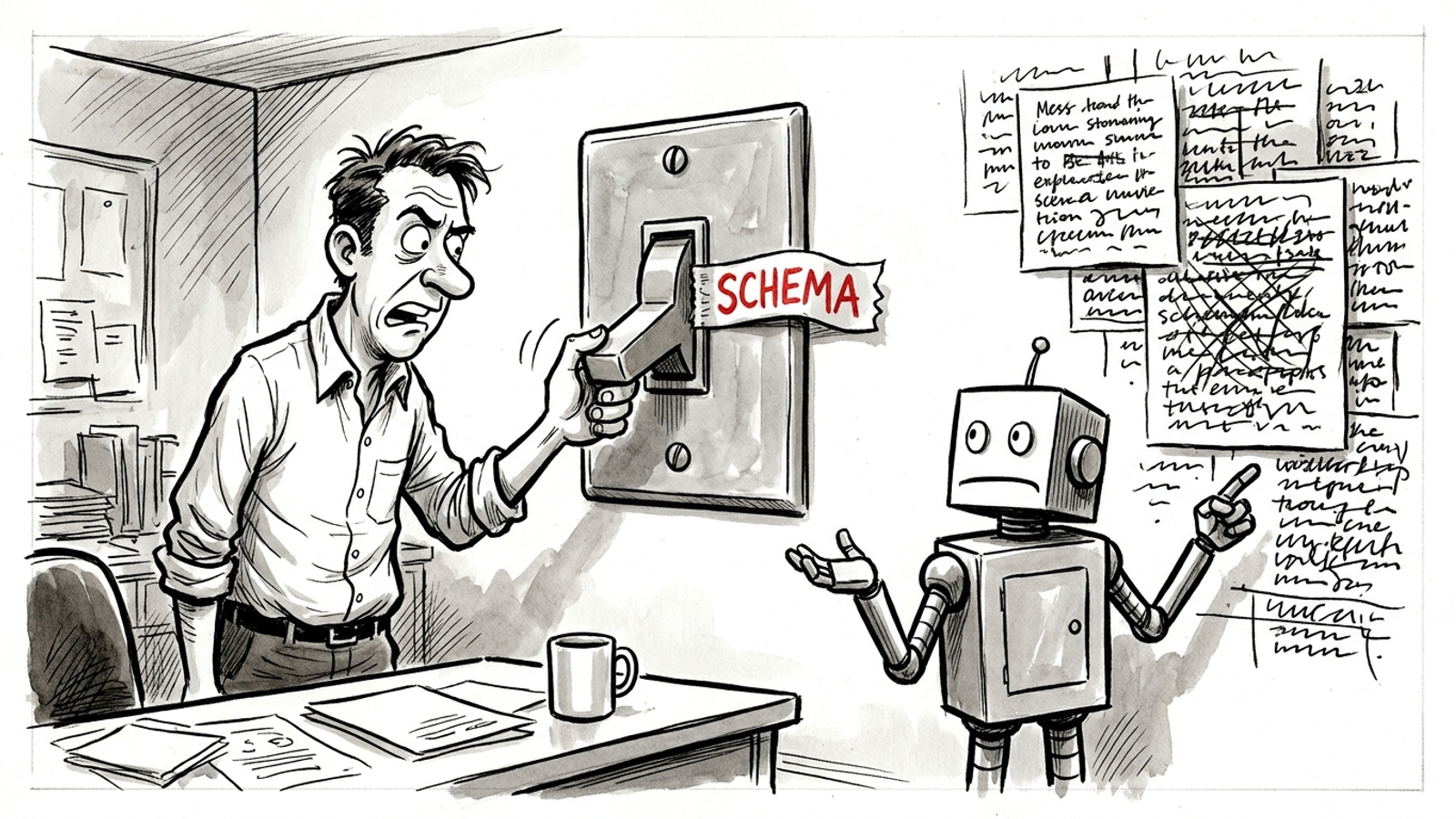
Keep useful basic markup. But if you have to choose between polishing another property and making the page answer a question plainly, write the answer. Put it beneath a clear heading, in clean HTML, where it can stand alone. Markup cannot make a vague paragraph quotable.
Belief 4: “More content means more citations”
More pages feel like more lottery tickets. That is a comfortable production target: publish on Tuesday, publish again on Thursday, watch the archive grow. The trouble is that a larger archive does not guarantee a clearer answer.
Answer engines can break content into chunks, match a chunk to a question and pass the strongest matches to a model. If the answer is buried in paragraph eleven of a 2,000-word guide or smeared across four sections, a competitor’s tight 150-word section may be easier to use. Length is not the enemy. Making a reader assemble the answer from scattered hints is.
The cost is an archive that keeps growing while the prompts you care about keep citing someone else. Worse, the next article can repeat the same almost-answer rather than fix it.
Improve the answer before you increase the output. Give each buyer sub-question its own heading and roughly 100 to 300 words that work without the rest of the page. Cut the throat-clearing above it. If the answer already exists on your site, make that passage better instead of commissioning a thinner version at a new URL.
Belief 5: “My own site is enough”
This is the most costly belief on the list, and the one I hear most from owners with a decent site. The reasoning sounds fair: my pages are accurate, so why would ChatGPT need anyone else? Because what your business says about itself is only part of what an answer engine can find.
In an Ahrefs study of 75,000 brands, YouTube mentions at 0.737 and branded web mentions at 0.664 correlated with AI visibility, compared with 0.218 for backlinks and 0.194 for content volume. Top-quartile mention brands earned up to 10x more AI Overview citations, while 26% of brands got zero mentions. Correlation is not an instruction to chase mentions anywhere you can buy them. It is a reason to look beyond your own domain.
The source mix reinforces that point: ChatGPT leans on Wikipedia, news and blogs, while AI Overviews also draw heavily from blogs, news, Reddit, Quora and LinkedIn. Reddit is the tell. It gets retrieved often even when much of it is discarded. An outside voice gives the engine something different from your own sales copy.
Say your site calls you the best option for small bakeries. A relevant thread, a YouTube review or a trade blog describing that same use case says something your homepage cannot: someone else found it worth discussing. Without that confirmation, you can improve your own pages indefinitely and leave a buyer’s doubt unanswered elsewhere.
Pick five pages where an independent mention could settle a specific doubt. For each, look for one useful, honest outside account: a customer story on a trade blog, a straight answer in a relevant thread or a review that names the use case. Then make sure your own page answers the question just as plainly. Talking louder about yourself is not the same as giving others something to confirm.
Belief 6: “I can’t see which prompts mention me”
This one comes with a shrug. There is no Search Console for ChatGPT, so visibility feels unmeasurable. You may not get a neat dashboard handed to you, but you can run a fixed test and see what changes.
Start with 30 to 50 high-intent queries across branded, category and use-case terms. Run the same set weekly across ChatGPT, Perplexity, AI Overviews and Gemini. In a sheet, record:
- whether your business is mentioned;
- where a citation to you sits, when there is one;
- which competitors appear when you do not.
Group the results by question cluster and engine. That gives you a working view of share of voice and, more usefully, a list of answers you are losing. Without that list, you can spend a month improving the wrong page.
Say you spend $20k a month on ads and decide to rewrite your homepage for AI. If the buying prompts you care about never ask the question your homepage answers, you have changed something visible without touching the gap. Three prompts where rivals answer the pricing question and you get nothing point to a missing pricing answer, not necessarily a lack of domain authority.
Name the prompts before you fix the passages. Build the set this week, even if it lives in a sheet. The passage-first procedure in this guide follows the same loop: write the missing answer, test the same prompts again and keep what gets cited. A measurement routine is only useful if it changes what you write next.
Belief 7: “This is a one-time project”
Old SEO projects had a comforting ship date. Publish the pages, watch rankings settle, move to the next project. AI citations do not offer that kind of finish line.
Cited domains turn over at 40 to 60% monthly, reaching 70 to 90% drift over six months, with AI Overview volatility running 0.68 to 0.73 against 0.49 to 0.55 for organic results. A different sub-question, a new thread or a clearer competing passage can change what an answer uses. Owners can still rank one to three and wonder where the traffic went when the AI answers the question before a reader reaches the blue links.
The cost is quiet decay. You see two citations, call the project done, and six months later a competitor owns the pricing and comparison answers. Your pages may not have changed. The answers around them have.
Re-run the same prompt set every month. Keep passages that still earn citations; revisit the ones that slip. Treat it like search-term mining, not a site launch. The point is not to rewrite every page on a schedule. It is to notice which buyer question you have stopped answering well enough.
What I’m still not sure about: “One answer works everywhere”
The practical shift behind all seven beliefs is the same: stop treating the keyword or the whole page as the only unit worth improving. A buyer question can fan out into smaller questions. A clear passage can answer one of them, and an outside mention can help confirm what your site says. Perfect schema and a strong rank do not replace either job.
Start small this week. Pick ten buyer prompts where you want to be named. Run them in ChatGPT and AI Overviews, and write down who gets cited for each sub-question. Rewrite one missing answer as a standalone section. Work to earn one third-party mention that confirms it, then test those prompts again.
A sheet works for ten prompts. At 50 prompts across four engines every week, it starts to look like the 1am mining grind I left PPC to escape. That is why I run it inside groas now, where tracked prompts, answers, citations and share of voice stay live instead of going stale in a tab. The machine holds the monitoring; I still have to judge which answer needs work.
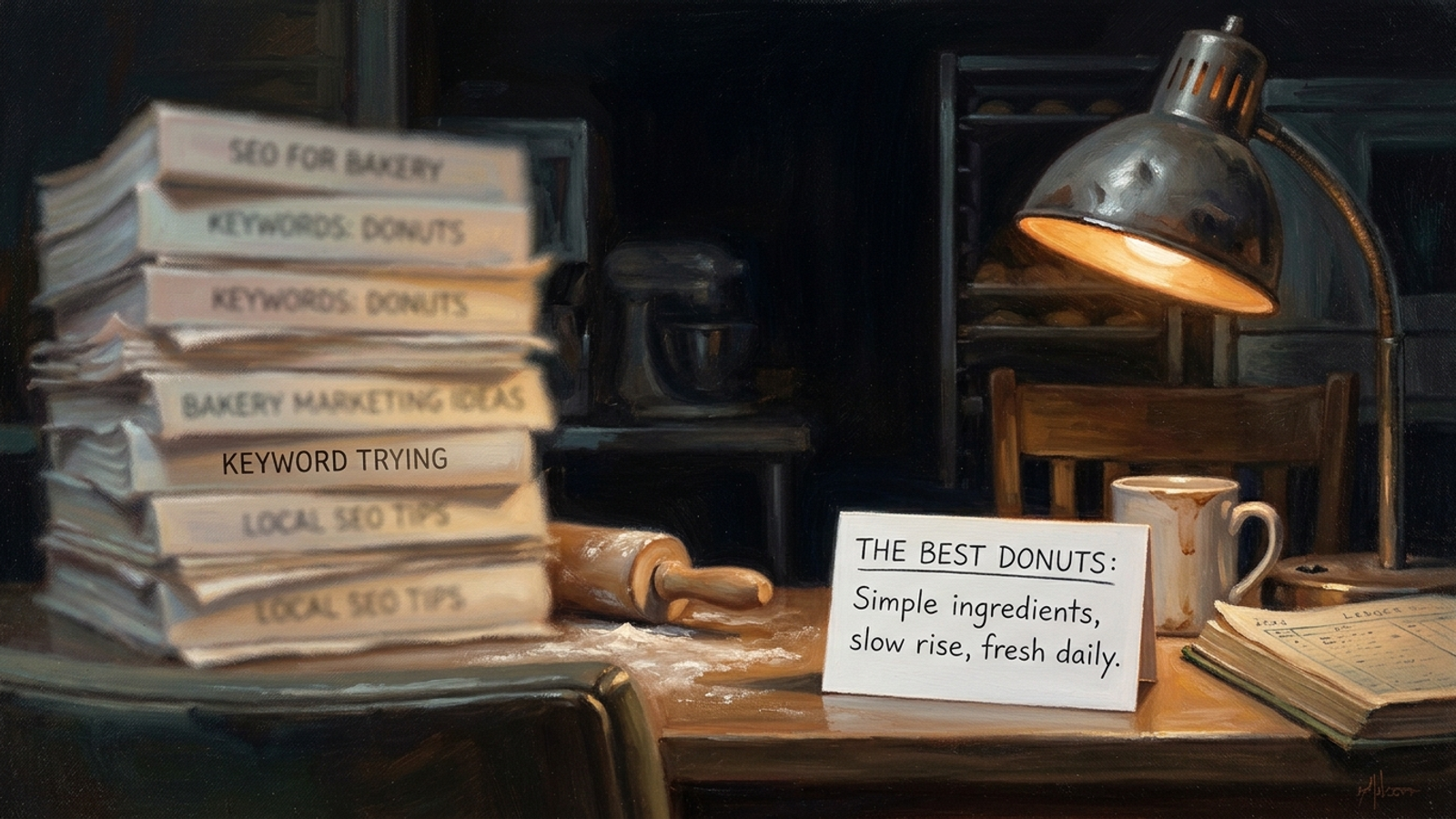
Here is the belief I cannot settle yet: how separately should we write for each engine? Right now, one clear passage seems to travel well across ChatGPT, Perplexity and Overviews, with small formatting wins on each. But volatility is high and their source mixes are not identical. I would not bet a full year on one-size-fits-all. My rule until the prompt log tells me otherwise: write one quotable answer for the buyer first. Adjust for an engine only when you keep losing there and winning elsewhere. Stop optimising pages by reflex. Start answering questions where someone else can confirm you got it right.